DCIC Scene-Text Image Forgery Analysis
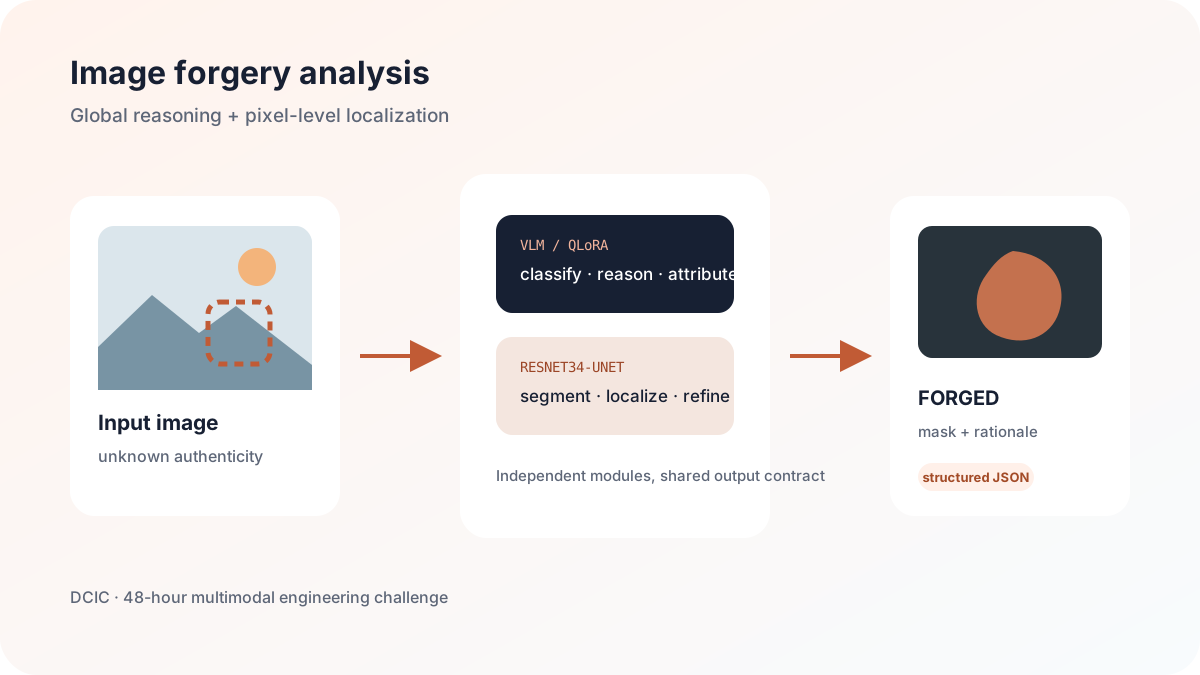
A time-boxed pipeline combining a vision-language model and a segmentation network for forgery detection, localization, and attribution.
- My role
- System design, model adaptation, and pipeline integration
- Methods & tools
- Qwen-VL · QLoRA · ResNet34-UNet · Structured prompting
01
Problem & challenge
A single model struggled to cover both semantic judgment and pixel-level localization, while the competition window demanded fast, independent iteration and reliable integration.
02
Key contributions
Used a vision-language model for global decisions and structured attribution, with a segmentation network for pixel-level masks.
Applied QLoRA for efficient adaptation and designed robust structured output with fallback parsing.
Decoupled the two branches so they could be iterated independently under a strict delivery window.
03
Outcome & disclosure boundary
Delivered the full detection, localization, and explanation pipeline within the competition window, validating the engineering value of the VLM-plus-segmentation design.
View on GitHub